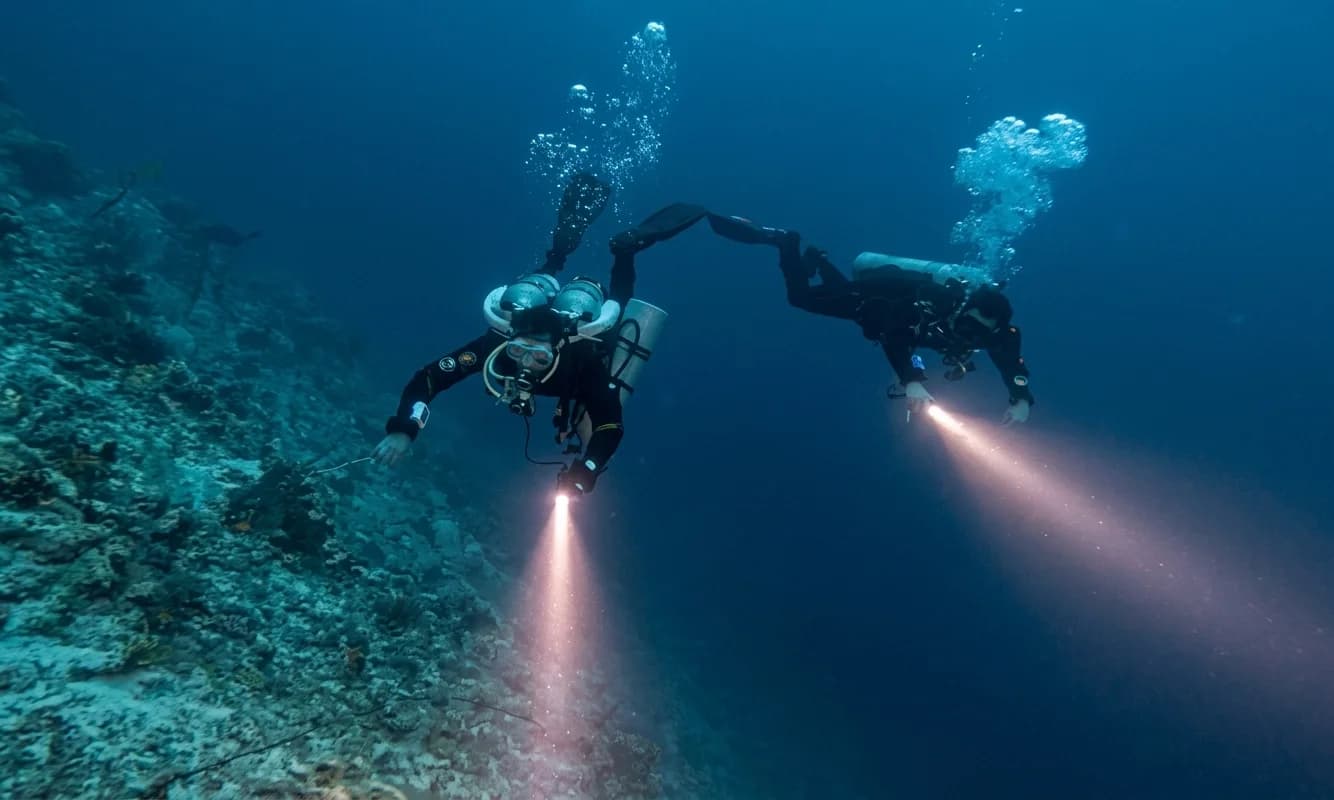
Road to the depths of Brunei : Part 3 Tech 1 class
Gas mixing, deep deco planning, and complex drills pushed my limits daily. The physical and mental rigor of Tech 1 was immense, but I finally mastered the required skills
Field transcript
Dive notes and observations
Introduction
Finding a buddy for my GUE Tech 1 class was a priority, especially after my discover CCR class with Jong Moon LEE. I decided to complete my Tech 1 course with him, so I contacted him to book a class for September—the optimal time for me to tackle Tech 1.
The next step was securing a reliable dive buddy. I explored several options, whether through the instructor or by networking. Initially, I connected with Basil about Tech 1, but our dates didn't align. We decided, instead, that we could dive in Brunei together after the course. Sheena was also interested, but unfortunately, her schedule didn't work out. I shared with her my desire to dive in Brunei and work on a local project.
Jeeven had contacted me about doing Tech 1 with him in June, but financial issues made it impossible at the time.
So, I waited, and finally, my instructor, Jong Moon LEE, helped me find a great buddy.
The Trip
Flying to Cebu wasn't as straightforward as my previous trips; in fact, the preparation started long before the plane even took off. I had a huge number of work tasks to finish before I left, and several issues were still pending, yet I had to go. Upon arriving at the airport, I was hit with a surprising realization: I was overweight. I hadn't encountered the fact that my new drysuit was heavier than my old one, so I had to pay extra for luggage. I really need to establish a habit of managing my weight, especially now that I know how heavy this gear is. This will be crucial in the future, particularly when I’m operating with CCR.
When I arrived in Cebu, the driver was already waiting for me. It was a genuinely nice experience because I didn't have to deal with finding a Grab or figuring out the best way to reach the dive center.
When I arrived at Ocean Player, I was surprised to find Eason Jiang already completing his Tech 1 course alongside Gideon Liew and Jianing song.
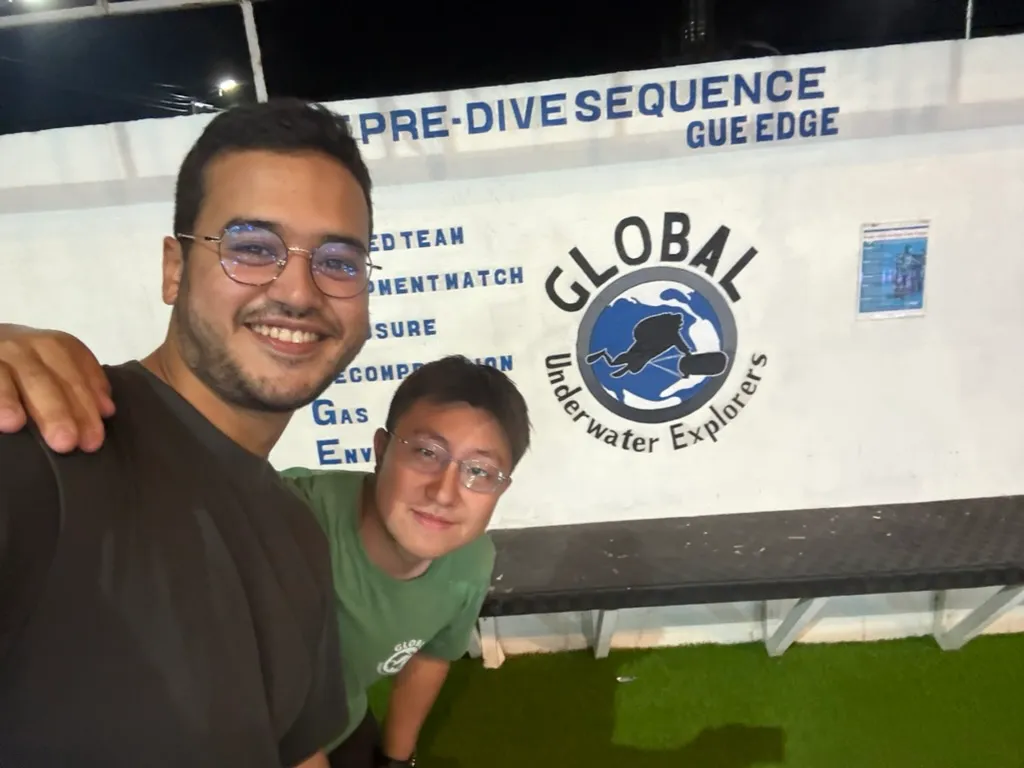
Fun Diving to Get Ready
On my first day, I went with Minsu Park to do some check dives. We practiced skills required for Tech 1, but also skills we would be learning during the course. It was incredibly beneficial for practicing and checking all my equipment to ensure everything was working properly and to identify any issues with my setup before the actual class.
Meeting My Buddy
In the afternoon, I met Artem, who would be my Tech 1 buddy. He had just purchased a drysuit and went with Minus to test it and verify that everything was working as expected.
As is tradition at Oceanplayer, we were treated to delicious Korean food, and we spent the time getting to know each other.
The next day, we dived with Artem. My body was ready for Tech 1, and we began discussing the pre-Tech 1 training plan with Minsu Park and Artem.
The training included:
- Reel deployment,
- Valve drill,
- S drill,
- Light failure.
We practiced these skills. At first, it was a little messy, but it was great that we managed to execute correct ascents and descents with the right speed and coordination.
First Day of Class
The first day was devoted to theory. I learned so much, starting with understanding why we choose specific gases and which gases we avoid, and why we use certain types of planning over others.
This knowledge helped me understand that standardizing processes and gas mixtures significantly simplifies thinking and planning for the entire team—both in terms of procedure and preparation—and allows us to understand each other more effectively underwater. For example, in GUE Tech 1, we have four standard gases: 50% O2, 100% O2, 21/35, and 18/45. The fact that there are only these specific mixes makes it clear to know the intended use of each one.
Second Day
On the second day, we started working with a stage setup. It wasn't difficult to process; remembering each step was straightforward. However, being efficient proved to be the hardest part. I realized that wanting to be fast made me forget a step, while moving too slowly meant I might get stuck. I need to progress further to make this a true muscle memory.
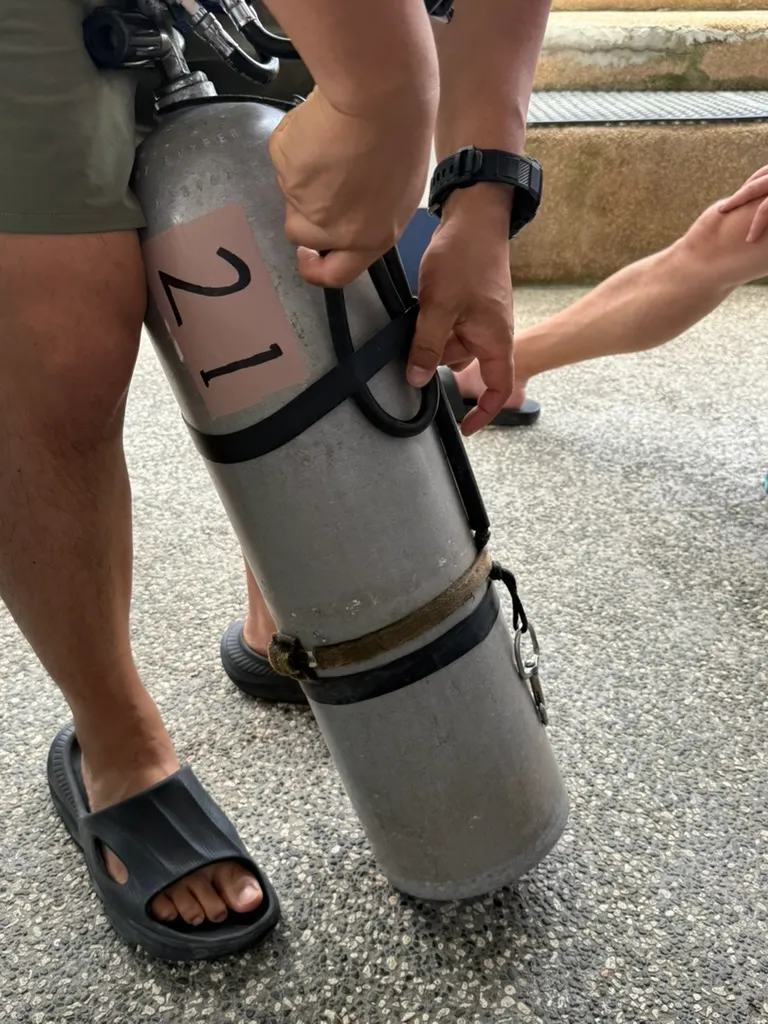
I also struggled with my buoyancy control. I was not proficient with it. For instance, if we decided to hover at 5m doing a ±1m drill, and I exceeded the necessary threshold, I didn't know why. I don't know if it's linked to the conditions in Cebu or if my equipment isn't perfectly dialed in, but it was a source of worry by the end of day two.
Day 3
Today, we learned about decompression and how to plan dives using a deco planner. Unfortunately, my deco planner didn't work, even with a 14-day license, so I couldn't use it for now until I find a solution.
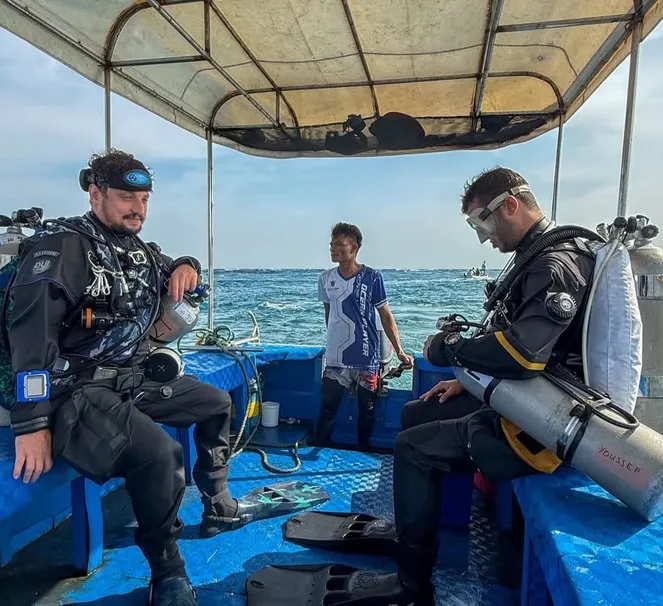
Regarding this morning's dive, my awareness of sequences and my buoyancy stability were much better during the exercises. However, I still need to improve greatly because of small mistakes. For example, not losing neutral buoyancy, forgetting a step in a sequence, or taking too much time during a gas switch—these are things that need constant improvement. Despite this, I was happy with my performance today. Not satisfied, but happy with the progress.
To help myself memorize, I stayed in my room and repeated the sequences, building muscle memory. Even if it wasn't hard, it helped me improve my time and efficiency.
One of the great perks of Oceanplayer is the nearby massage parlor. After the class, and more than eight hours after diving, we decided to go. It allowed us to relax really well and release a lot of the stress we had accumulated.
Day 4
This day was about proving to Jong Moon LEE that we had mastered our ascent procedures, even when encountering issues.
Ref:minsu joined our dive, and Jong Moon LEE wanted us to demonstrate our team dynamic while diving as three people.
During Dive 2, the plan was simple: descend to 24m, deploy a reel, face a failure, ascend to 12m, gas switch, and then ascend at 3m/min. Both of us faced a failure skill, but Artem had two failures, so we had to perform an S-drill. Ref:jong-moon was planning to make the second failure fixable, but neither Artem nor I checked if the bubble issue was actually fixable.
During that time, the current built up, and we started drifting very fast. I genuinely thought I was doing a drift dive in Komodo. At 12m, the problems started. Artem couldn't vent his drysuit gas, so he ascended, and I was trying to maintain my buoyancy at 12m. I didn't want to ascend quickly, or both of us would surface. JM intervened and helped Artem with the gas switch, and then I managed my own gas switch and cleanup. It was a one-of-a-kind experience. Afterward, we managed to stay at 6m using our stage, and everything returned to normal.
A minor point, though: neither Artem nor I asked if the issue was fixable. Minus points for us because of that oversight.
We also planned a trimix dive—a 45m dive based on our DCR. We could stay for 20 minutes, so we decided on a 45m, 20-minute dive. The deco strategy was to perform a one-minute stop every 3m from 21m to 6m, then 15 minutes at 6m, followed by 5m ascent (which meant one minute at each meter).
It was my first time planning a deco dive with such a detailed ascent strategy. Before this, I was simply following the computer's instructions.
Later that day, we gathered together and celebrated Jianing’s birthday. It was an amazing day for her—her first 51m dive combined with passing the Tech 1 class, all celebrated with everyone.
Day 5
In the morning, we dove with Minsu Park.
- Rescue dive
- Nitrox 32 dive to 30m for a check
- Trimix dive
I felt a surge of excitement when Jong Moon LEE announced that I could fill with trimix. We went to the dive center and rested a little, having some fruits and sugar to recharge. I put myself into focus mode; I didn't want to disappoint Jong Moon LEE. I needed to prove that I could manage the dive and stay within the plan. I tried hard to remember the sequence he had taught us.
Afterward, Jong Moon LEE congratulated us. Based on our dive, he challenged our decision regarding ascending while looking at the wall. My answer was that facing the wall was easier than ascending while facing each other in the open blue water. He felt that we were scared and not confident enough to ascend in the blue water—or at least, not as confident as when looking at the wall.
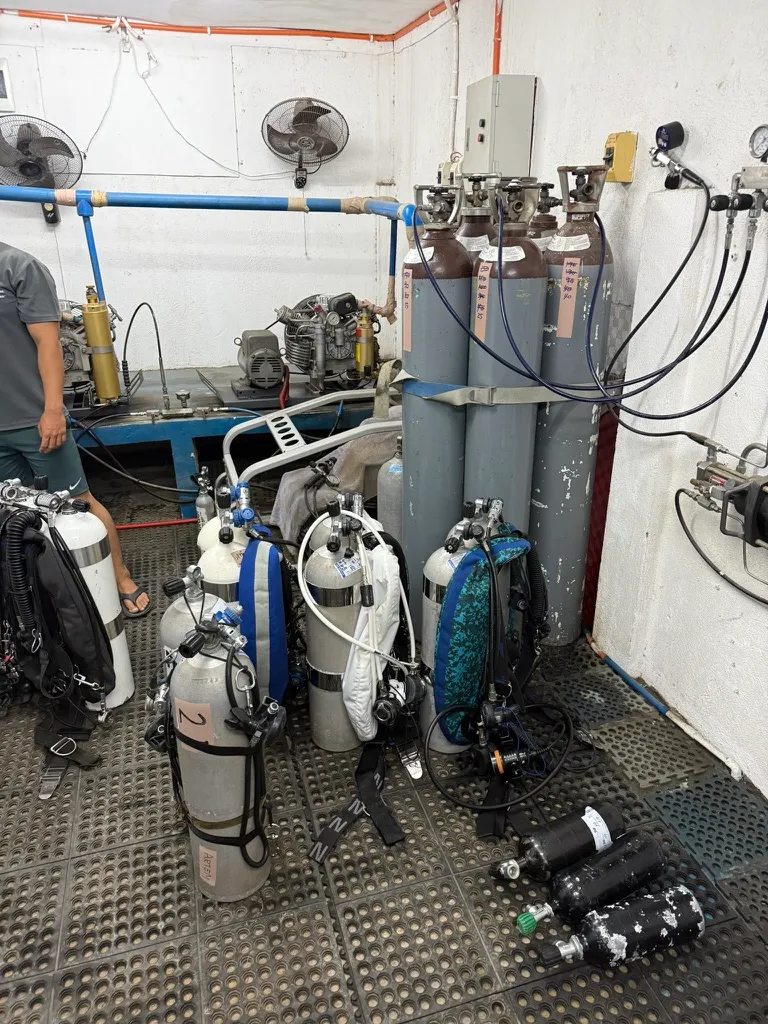
A Look at the Compressor Room
After dinner, Minsu Park showed us the compressor room. He explained how he manages to fill the trimix and the specialized techniques they use at Oceanplayer to make the fills faster.
Day 6
The first dive was good, with no major issues, although staying at 6m and doing multiple ascents and descents was a little demanding. Dive 2 was good; I took the advice from Jong Moon LEE to let my legs down.
Swimming Test
After our second dive, I felt immense relief. I was stressed about failing again, remembering the time I failed my CMAS 3*. GUE is an agency that challenges you—they won't feel you have the capacity for the dive. All of this made my body utterly exhausted. On the way to the swimming pool, I dozed off and heard myself snoring. That truly demonstrated how tired I was.
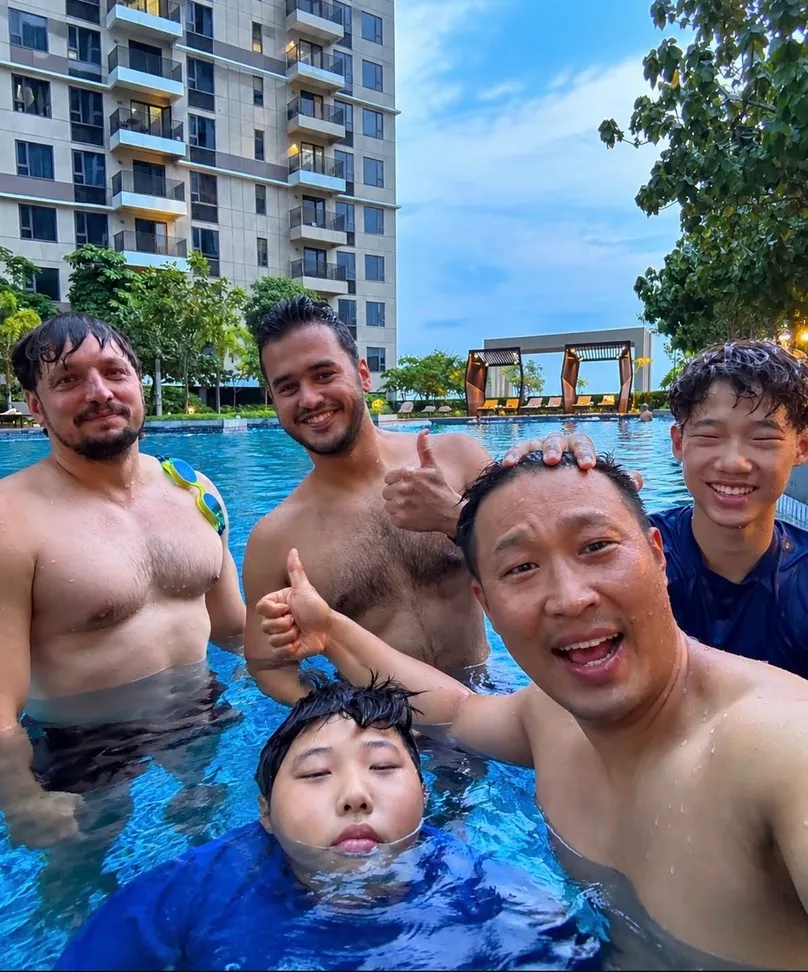
We arrived at a really beautiful condo, unlike the Lapo Lapo area. We started our swim test with a 400m swim in under 14 minutes; it was hard. Artem is a natural swimmer, so he managed to do the 400m in under 8 minutes.
Celebration
After the swim test, we went to celebrate passing the Tech 1 class. Artem chose Korean BBQ, and we all agreed it was a fantastic choice. The restaurant staff were wonderful to us; the meat was incredible, and we couldn't complain about anything.
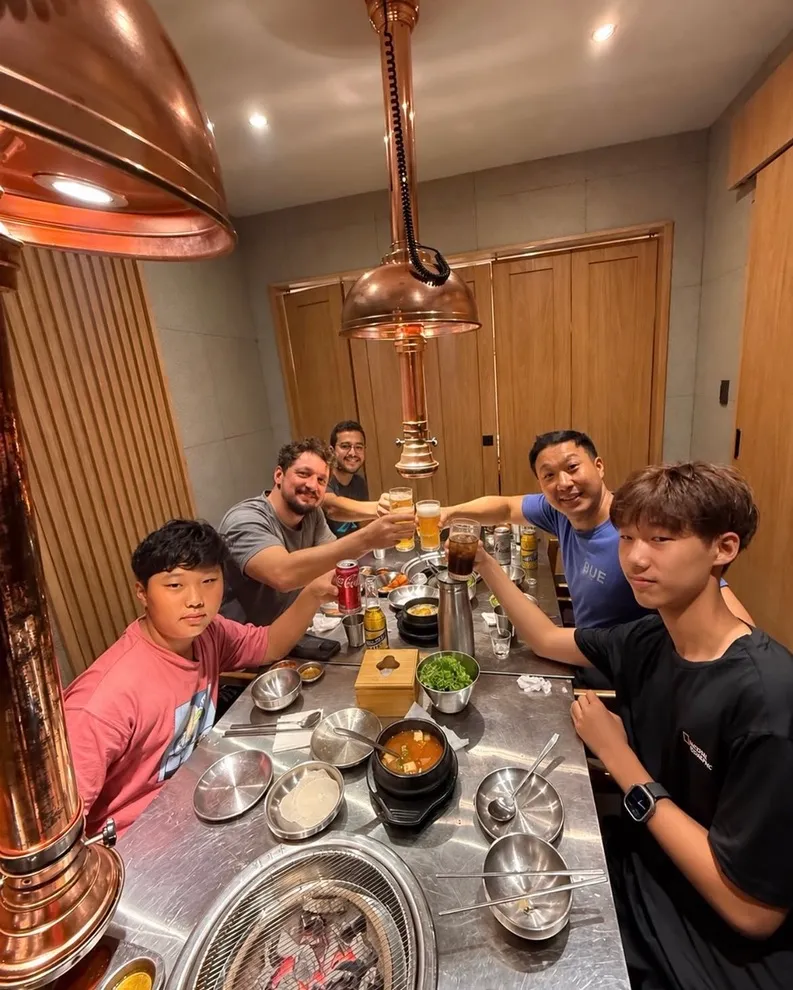
What a relief after so much stress from the class. It was a course where I learned immensely, where I made many mistakes, but now I feel that I have truly stepped into the world of technical diving. And this is only the beginning of many new adventures.
Conclusion
Even after passing Tech 1, this is merely the starting line—a long journey into the world of technical diving. Now, I need to practice more, dive more, and improve my SCR (Surface Concrepancy Rate) to be able to stay longer and see more.